

10 Oct, 2026
Meet Sabba Keynejad: The Founder Who Turned Y Combinator Rejection Into a $40M ARR Startup
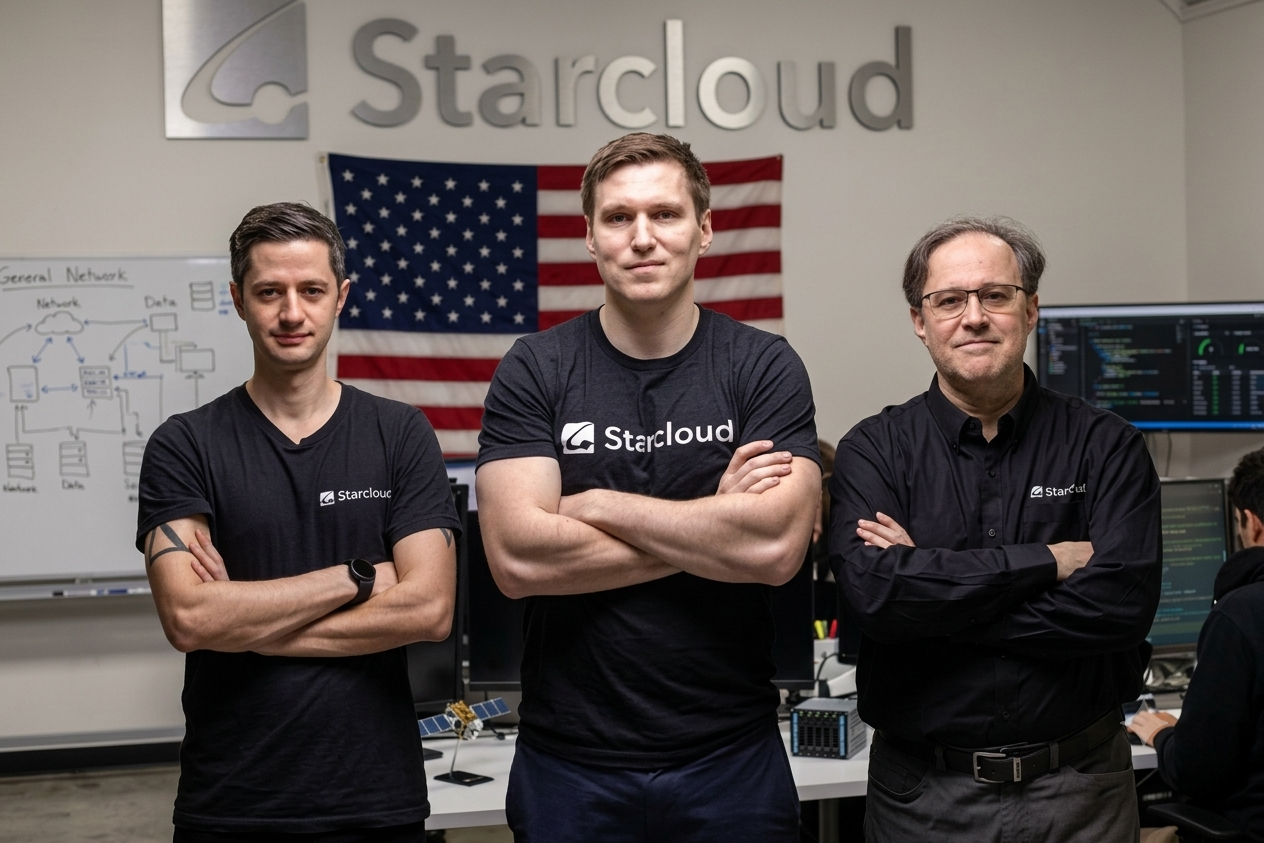
Starcloud Raises $250 Million in a Series A extension, taking the company’s valuation to approximately $2.3 billion. The startup is developing AI-powered data centers in space, aiming to transform how artificial intelligence workloads are processed beyond Earth. The latest investment will help expand satellite manufacturing, orbital computing infrastructure, and future launch capabilities.
With global demand for AI computing growing rapidly, Starcloud believes that space-based infrastructure could become an important part of the future technology ecosystem.
Starcloud Raises $250 Million to Expand AI Data Centers in Orbit
Starcloud Raises $250 Million to accelerate its ambitious vision of placing AI data centers in orbit. Instead of relying entirely on traditional facilities on Earth, the company plans to operate satellites equipped with high-performance computing hardware capable of handling artificial intelligence workloads.
This approach could make use of abundant solar energy in space while overcoming some of the land, power, and cooling limitations faced by terrestrial data centers.
Starcloud has already demonstrated that advanced computing can function in orbit. One of its early satellites carried an NVIDIA H100 GPU, proving that AI computing experiments can be successfully performed in space.
Starcloud Raises $250 Million at a $2.3 Billion Valuation
The latest financing is a $250 million extension of Starcloud’s Series A funding, following the company’s earlier $170 million Series A round completed in March.
The new investment values Starcloud at approximately $2.3 billion, more than doubling its previous valuation of $1.1 billion.
The funding round was led by Manhattan West and included participation from Benchmark, EQT, Soma, NFX, 776, NVIDIA, Cisco Investments, Cedar Capital, Goanna Capital, and Standard Capital.
The participation of NVIDIA highlights growing confidence in Starcloud’s long-term vision for orbital AI infrastructure.
NVIDIA Partnership Strengthens Starcloud’s Vision
NVIDIA’s involvement extends beyond financial investment.
Starcloud plans to integrate NVIDIA’s next-generation Space-1 Vera Rubin Module into future satellites designed for space-based computing.
The company previously launched an NVIDIA H100 GPU into orbit, where it successfully conducted AI computing experiments, including training a large language model in space.
The collaboration demonstrates how major technology companies are beginning to explore computing infrastructure beyond traditional cloud environments.
Why AI Data Centers in Space Matter
Artificial intelligence is creating unprecedented demand for computing power worldwide. As How Artificial Intelligence Is Changing Every Industry continues to reshape sectors such as healthcare, finance, manufacturing, education, and transportation, the need for powerful computing infrastructure has grown dramatically. This rising demand is one of the key reasons startups like Starcloud are exploring AI data centers in space.
Training large AI models requires enormous numbers of GPUs, significant electricity, advanced cooling systems, and large-scale infrastructure.
As companies continue expanding AI services, existing data centers face increasing pressure from rising energy consumption and limited physical capacity.
Starcloud believes orbital infrastructure could help address some of these challenges by utilizing solar energy and the unique thermal conditions of space.
Although the concept remains experimental, investors see significant long-term potential in space-based AI infrastructure.
Orbital Computing Is Becoming More Competitive
Starcloud is not alone in pursuing orbital computing.
The company has submitted plans for a future constellation of up to 88,000 satellites capable of operating as AI-powered orbital data centers.
Meanwhile, SpaceX has proposed an even larger satellite network under its Starmind project, potentially involving hundreds of thousands of computing satellites.
These developments suggest that orbital AI infrastructure may become the next frontier in the global technology race.
Launch Capacity Remains a Major Challenge
Building advanced satellites represents only one aspect of Starcloud’s strategy.
Reliable and affordable launch services remain essential for deploying large orbital computing networks.
As demand for commercial launches increases, competition for launch capacity is expected to intensify.
Starcloud intends to use its latest funding to secure launch opportunities, expand manufacturing, and develop larger spacecraft capable of supporting more powerful AI computing workloads.
Future Applications of Orbital AI Infrastructure
If Starcloud’s technology proves commercially successful, it could reshape how computing infrastructure is deployed.
Instead of processing every AI workload on Earth, some applications could be handled directly in orbit.
For example, satellites collecting Earth observation images could analyze information before transmitting only relevant results back to Earth.
This approach could reduce communication costs, improve processing speed, and support applications in communications, defense, scientific research, climate monitoring, and remote sensing.
Starcloud’s Rapid Growth
Starcloud has experienced remarkable growth in a short period.
The startup achieved unicorn status in 2026 after raising $170 million at a $1.1 billion valuation only months after completing the Y Combinator program.
Now, Starcloud Raises $250 Million, pushing its valuation to approximately $2.3 billion.
The rapid growth reflects increasing investor confidence in AI infrastructure companies that are developing innovative solutions to meet future computing demand.
Why Starcloud Raises $250 Million Matters
Starcloud Raises $250 Million at a time when artificial intelligence is transforming industries worldwide.
The funding demonstrates growing confidence that orbital computing could eventually complement conventional cloud infrastructure.
While significant engineering, regulatory, manufacturing, and launch challenges remain, Starcloud now has substantially greater financial resources to continue developing its technology.
If successful, the company’s approach could redefine the future of AI infrastructure by extending computing beyond Earth.
Frequently Asked Questions
What is Starcloud?
Starcloud is a technology startup developing orbital AI data centers that process artificial intelligence workloads using satellites in space.
How much funding did Starcloud raise?
Starcloud raised $250 million in a Series A extension, increasing its valuation to approximately $2.3 billion.
Who invested in Starcloud?
The funding round included Manhattan West, NVIDIA, Cisco Investments, Benchmark, EQT, Soma, NFX, 776, Cedar Capital, Goanna Capital, and Standard Capital.
Why does Starcloud want AI data centers in space?
The company believes space offers abundant solar energy, improved thermal management, and new opportunities to expand computing infrastructure beyond Earth’s limitations.
Has Starcloud already tested AI hardware in space?
Yes. The company successfully launched an NVIDIA H100 GPU into orbit and conducted AI computing experiments in space.







Leave a Comment