

10 Oct, 2026
Meet Sabba Keynejad: The Founder Who Turned Y Combinator Rejection Into a $40M ARR Startup
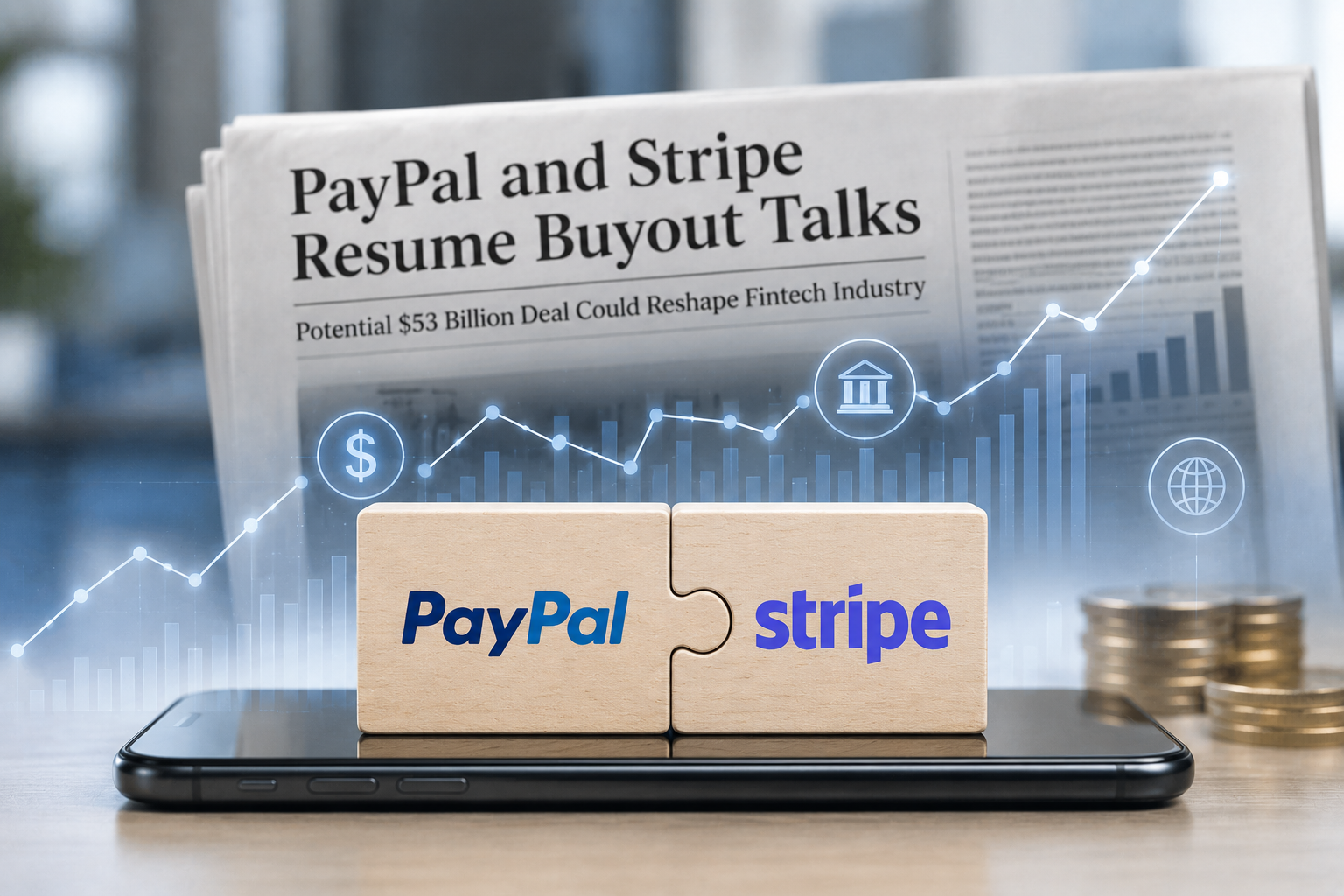
The fintech industry is once again in the spotlight as PayPal Stripe Buyout Talks have reportedly resumed after weeks of uncertainty. According to multiple reports, PayPal is back in discussions with payment technology company Stripe and private equity firm Advent International regarding a potential acquisition that could be worth more than $53 billion.
The renewed negotiations come after PayPal rejected an earlier proposal in July that valued the company at $60.50 per share. Although the initial offer was turned down, discussions reportedly continued behind closed doors, suggesting both sides still see strategic value in completing the transaction.
If finalized, the acquisition would unite two of the biggest names in online payments and could reshape the competitive landscape of the global fintech industry.
Reports indicate that Stripe and Advent International never completely walked away after their initial bid was rejected. Instead, negotiations reportedly continued with the possibility of improving the offer.
Why Have the Paypal Stripe Buyout Talks Restarted?
The original proposal valued PayPal at just over $53 billion, representing a significant premium over its trading price at the time. However, PayPal’s board reportedly believed the offer underestimated the company’s long-term growth potential and future earnings.
Recent reports now suggest both parties are working toward a revised agreement, although there is still no guarantee that a deal will ultimately be completed.
Why Did PayPal Reject the Earlier Offer?
While the proposed acquisition represented an attractive premium over PayPal’s market price, the company’s leadership believed it did not reflect the true value of its business.
PayPal remains one of the world’s largest digital payment platforms, serving hundreds of millions of customers and millions of merchants worldwide. Beyond its flagship payment services, the company also owns Venmo, one of the most widely used peer-to-peer payment platforms in the United States.
Several market analysts described the original proposal as an opening bid rather than a final valuation. Some believed Stripe and Advent might eventually increase their offer if negotiations progressed.
Investor Confidence Returns
News that discussions had resumed immediately attracted investor attention.
Following reports of the renewed negotiations, PayPal shares gained nearly 2%, lifting the company’s market capitalization to approximately $54 billion. Investors interpreted the continued talks as a positive sign that both sides remain committed to exploring a transaction.
The renewed optimism comes after several difficult years for PayPal.
During the pandemic, the company’s valuation soared as online shopping and digital payments became essential worldwide. At its peak in 2021, PayPal was valued at more than $280 billion. Since then, slowing e-commerce growth and rising competition have significantly reduced its market value.
Why This Could Become One of Fintech’s Biggest Deals
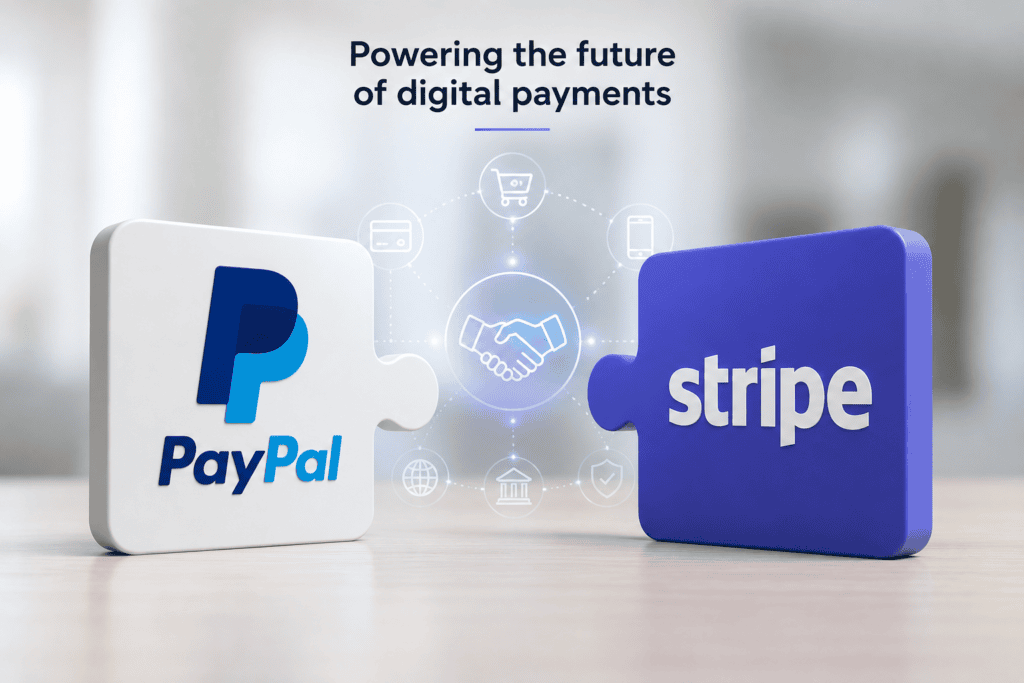
A successful merger would create one of the largest payment companies in the world.
Industry estimates suggest that a combined Stripe and PayPal business could process approximately $3.7 trillion in annual payment volume. That level of scale would strengthen the company’s position against major competitors including Apple Pay, Google Pay, Block, Adyen, Visa, and Mastercard.
The strategic appeal extends beyond payment processing.
Stripe has built its reputation as the preferred payments infrastructure for developers, startups, and enterprise businesses, while PayPal brings decades of consumer trust, a massive merchant network, and popular products such as Venmo.
Together, the combined company could expand payment services, strengthen cross-border commerce, improve merchant solutions, and accelerate innovation in artificial intelligence-powered financial services.
PayPal’s Turnaround Strategy Under New Leadership
The acquisition discussions come during an important period of transformation for PayPal.
Earlier this year, Enrique Lores became the company’s Chief Executive Officer and launched a broad turnaround strategy focused on simplifying operations, reducing costs, and restoring sustainable growth.
As part of this transformation, PayPal reorganized its business into three key divisions:
- Checkout Solutions
- Consumer Financial Services and Venmo
- Payments and Cryptocurrency
The company is also investing heavily in artificial intelligence to improve fraud detection, automate business processes, enhance customer experiences, and develop smarter merchant tools. These initiatives are expected to strengthen PayPal regardless of whether the acquisition moves forward.
Stripe’s Growth Makes It a Strong Buyer
Founded in 2010 by brothers Patrick and John Collison, Stripe has grown into one of the world’s most valuable privately held fintech companies. The company provides payment infrastructure for millions of businesses worldwide, enabling merchants to accept online payments, automate billing, manage subscriptions, and expand into international markets.
Earlier this year, Stripe was valued at approximately $159 billion, reflecting its strong market position and continued investor confidence. Its partnership with Advent International gives it the financial backing needed to pursue a transaction of this scale.
Unlike PayPal, which has built a large consumer-facing ecosystem, Stripe has primarily focused on merchants and developers. Combining these complementary strengths could allow the merged company to serve businesses and consumers through a single, integrated payments platform.
What Advent International Brings to the Deal
Advent International is one of the world’s leading private equity firms, managing more than $90 billion in assets across technology, healthcare, financial services, industrial, and consumer sectors.
According to reports, Stripe and Advent would each own an equal stake in PayPal rather than splitting up the company. This approach suggests the buyers see long-term strategic value in PayPal’s existing business, customer relationships, and technology platform.
Challenges That Could Affect the Acquisition
Although negotiations appear to be progressing, several important challenges remain before any agreement can be finalized.
Valuation Remains the Biggest Issue
The primary obstacle continues to be price.
PayPal reportedly rejected the original $60.50-per-share offer because its board believed the company deserved a higher valuation. Recent reports indicate that discussions are now focused on reaching a mutually acceptable price.
Regulatory Review
If an agreement is reached, regulators in multiple jurisdictions are likely to examine the transaction closely due to the size of both companies and their influence in global digital payments.
Competition authorities may assess whether the merger could reduce competition or affect merchants and consumers.
Integration Challenges
Combining two global payment platforms would also require significant operational planning.
Both companies operate different technologies, serve different customer segments, and maintain payment networks across numerous countries. Successfully integrating these operations while maintaining service quality would be a major undertaking.
What the Deal Could Mean for Businesses and Consumers
If the acquisition moves forward, businesses could benefit from expanded payment capabilities, improved fraud prevention, stronger international payment infrastructure, and more advanced financial tools.
Consumers may also experience faster checkouts, improved digital wallet functionality, enhanced security, and additional payment options as the combined company invests further in artificial intelligence and automation.
For merchants already using either Stripe or PayPal, a merger could simplify payment management while offering access to broader financial services.
The Bigger Picture for the Fintech Industry
The reported PayPal Stripe Buyout Talks reflect a broader trend across the financial technology sector.
Payment companies are increasingly pursuing mergers and acquisitions to gain scale, improve technology capabilities, expand internationally, and compete more effectively with traditional financial institutions and emerging fintech startups.
Artificial intelligence, embedded finance, digital wallets, real-time payments, and cross-border commerce continue to reshape the industry. Companies that can combine strong technology with global reach are expected to have a competitive advantage over the coming years.
Frequently Asked Questions (FAQs)
Why are PayPal and Stripe back in buyout talks?
PayPal and Stripe have reportedly resumed acquisition discussions after PayPal rejected an earlier $53 billion offer. Reports suggest negotiations are continuing, although no final agreement has been announced.
How much is the proposed PayPal acquisition worth?
The original proposal valued PayPal at approximately $53 billion, or $60.50 per share. Reports indicate both sides are discussing a potentially higher valuation.
What would happen if Stripe acquires PayPal?
A successful acquisition would create one of the world’s largest online payments companies, processing an estimated $3.7 trillion in annual payment volume while combining Stripe’s merchant technology with PayPal’s global consumer network.
Why has PayPal struggled in recent years?
PayPal has faced slower growth due to increasing competition from Apple Pay, Google Pay, changing consumer spending habits, and slowing e-commerce growth after the pandemic.
Has the PayPal and Stripe deal been confirmed?
No. Neither PayPal nor Stripe has officially confirmed that a deal has been reached. Both companies have declined to comment on market speculation, and negotiations remain ongoing.






Leave a Comment