

10 Oct, 2026
Google Ads vs Facebook Ads: Which Advertising Platform Should Your Business Choose?
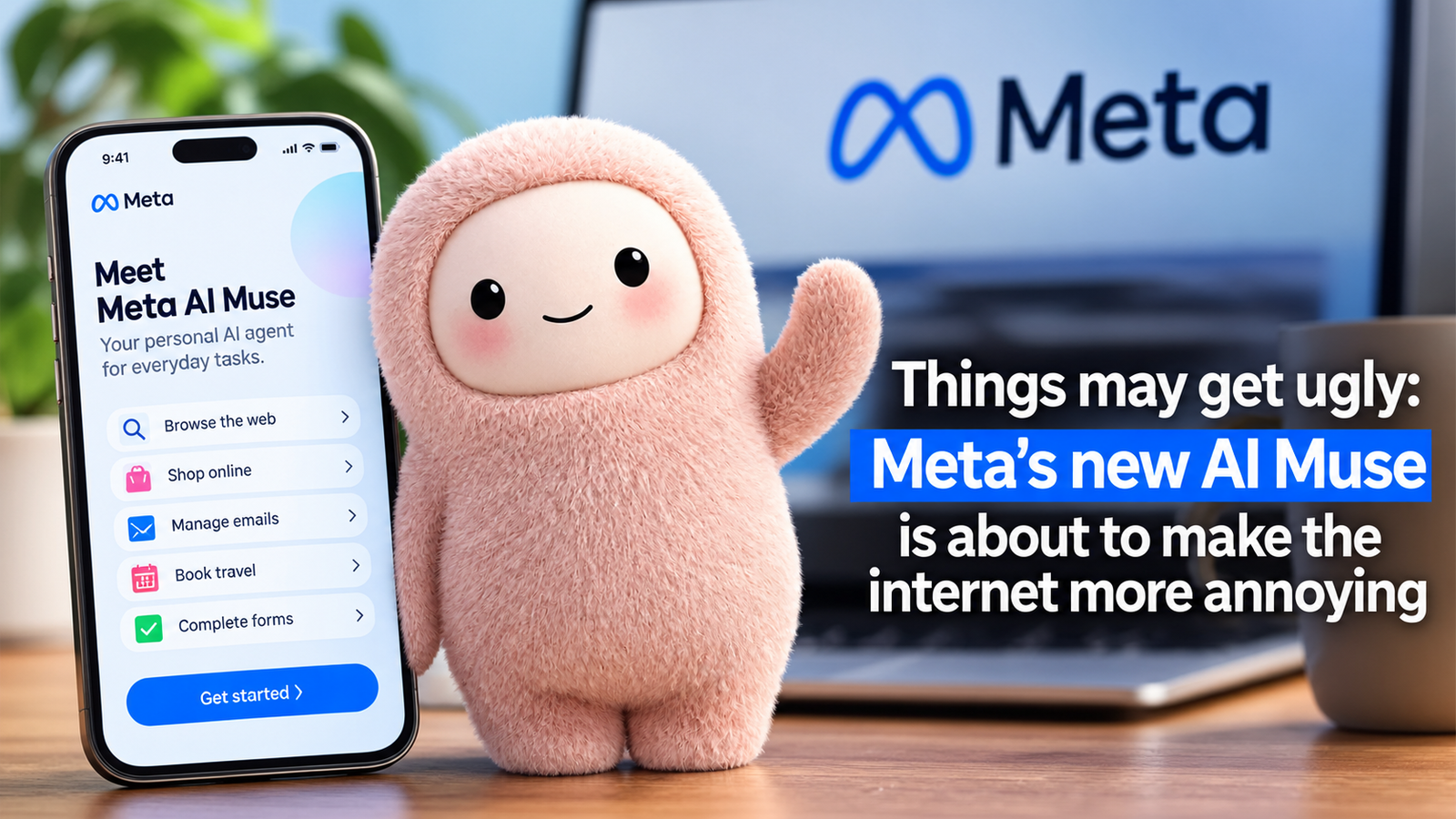
Meta has unveiled Meta AI Muse, its next-generation AI assistant designed to do far more than answer questions. The new AI agent can browse websites, compare products, shop online, manage emails, book travel, complete forms, and perform a wide range of digital tasks on behalf of users.
Meta believes Meta AI Muse represents the future of artificial intelligence, promising to save time and simplify everyday online activities. However, many technology experts argue the AI assistant could fundamentally change how the internet works—and not necessarily for the better.
Critics warn that as AI agents become more capable, the web could become increasingly automated, making it harder for publishers, businesses, and even users to distinguish between genuine human activity and AI-generated interactions.
What Is Meta AI Muse?
Meta AI Muse is an autonomous AI agent developed by Meta that can independently perform online tasks rather than simply responding to prompts like traditional chatbots.
Unlike conventional AI assistants, Muse can:
- Browse websites
- Compare products
- Shop online
- Manage emails
- Book travel
- Complete online forms
- Assist with research
- Perform repetitive digital tasks
The assistant operates in a secure cloud environment where users control what information it can access. According to Meta, sensitive data such as passwords and payment details remain protected while the AI completes approved tasks.
The goal is to reduce the time people spend navigating websites and allow AI to handle routine online activities automatically.
Why Experts Say Meta AI Muse Could Make the Internet More Annoying
While Meta AI Muse promises convenience, experts believe it may create unintended consequences for the internet.
Instead of millions of people visiting websites directly, AI agents could increasingly gather information, summarize webpages, compare products, and complete transactions without users ever opening the original sites.
For publishers and businesses, this could mean:
- Lower website traffic
- Reduced advertising revenue
- Fewer direct customer interactions
- Less engagement with original content
Digital marketers also warn that AI-generated browsing activity could make web analytics less reliable, making it more difficult to measure real user behavior.
As AI assistants become widespread, the internet could shift from a human-driven ecosystem to one increasingly dominated by automated agents.
Privacy Questions Surround Meta AI Muse
Privacy remains one of the biggest concerns surrounding Meta AI Muse.
Because the AI assistant performs personal tasks, it may require access to email accounts, shopping platforms, calendars, payment services, and social media profiles.
Meta says users remain in control of their data and can choose what information Muse is allowed to access. The company also states that security measures are in place to protect sensitive information during AI-assisted tasks.
However, privacy advocates argue that giving AI assistants access to large amounts of personal information increases potential risks and highlights the need for greater transparency and stronger user controls.
What It Means for Publishers and Content Creators
The launch of Meta AI Muse has raised concerns across the publishing industry.
If AI agents increasingly summarize articles instead of directing readers to original websites, publishers could lose valuable traffic, subscriptions, and advertising revenue.
Content creators may also face increased competition from AI-generated material, making it more challenging to attract audiences and monetize original work.
Many industry experts believe the growing use of AI assistants will force publishers to rethink how they distribute content and engage readers.
Could Meta AI Muse Transform the Internet?
Meta views Meta AI Muse as the next evolution of online computing.
The company believes AI agents will eventually become personal digital assistants capable of handling everyday internet tasks with little user involvement.
At the same time, technology companies including OpenAI, Google, Microsoft, and Apple are investing heavily in similar AI agents, signaling a major shift in how people may interact with digital services in the coming years.
Whether Meta AI Muse becomes an essential productivity tool or contributes to a more automated and less open internet will largely depend on user trust, responsible AI development, and future regulation.
Conclusion
Meta AI Muse has the potential to reshape how people use the internet by automating browsing, shopping, research, and everyday digital tasks.
While the technology offers greater convenience and productivity, experts caution that widespread adoption could reduce website traffic, increase AI-generated activity, and create new challenges around privacy, transparency, and online trust.
As AI assistants continue to evolve, Meta AI Muse may become one of the most influential technologies shaping the future of the internet, making it essential for users, businesses, and policymakers to carefully consider both its opportunities and its risks.







Leave a Comment