

11 Oct, 2026
Vishal Mega Mart Shares Jump 10%: Why Gunender Kapur’s Reappointment Has Investors Excited
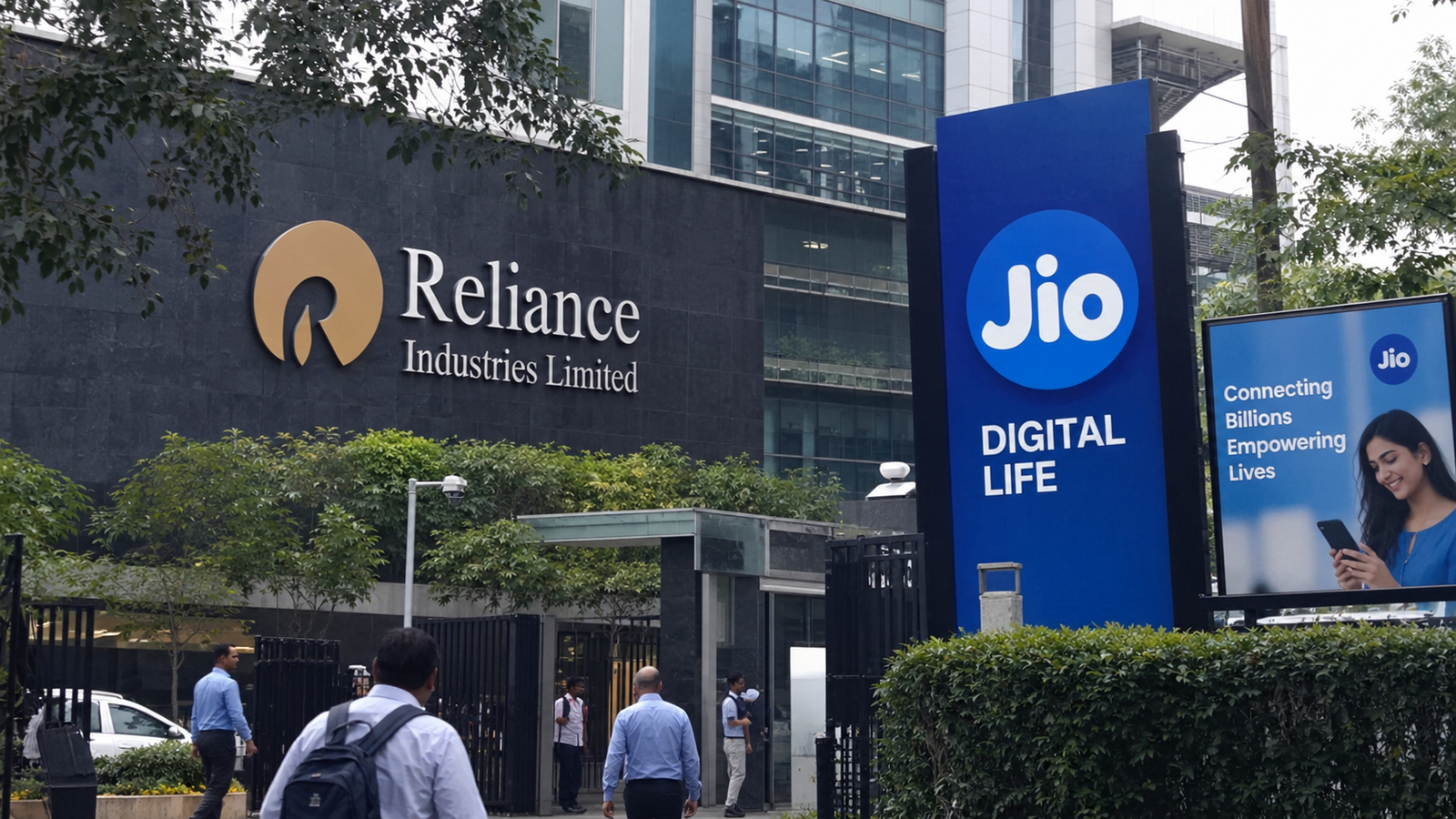
Jio IPO plans are moving closer to the market, putting Reliance Industries shareholders and investors in the spotlight as Jio Platforms prepares for what could become India’s biggest public offering. The proposed IPO is expected to raise around ₹37,700 crore, or about $3.8 billion, and could give public-market investors a direct way to value Reliance Industries’ telecom and digital-services business.
Jio Platforms has received approval from the Securities and Exchange Board of India (SEBI) for its proposed public issue after filing its draft papers earlier this year. Current reports indicate that the Jio IPO could open on October 21, with the shares potentially listing on October 28.
For Reliance Industries, which held a 66.43% stake in Jio Platforms before the proposed issue, the listing could provide a clearer market valuation for one of its most important businesses.
What the Jio IPO means for RIL shareholders
The biggest question surrounding the Jio IPO is what an independent listing could mean for Reliance Industries shareholders.
Jio Platforms is currently part of the larger Reliance Industries structure. Once Jio becomes publicly traded, investors will have a separate market price for the telecom and digital business. That could make it easier for the market to assess the value of RIL’s remaining stake.
Analysts have suggested that a publicly visible valuation for Jio could influence how investors value Reliance Industries as a diversified conglomerate. RIL’s businesses extend beyond Jio into retail, energy, new energy and other emerging areas.
However, the listing does not automatically mean that the entire value of Jio will flow directly to RIL shareholders. Investors will also have to consider factors such as RIL’s ownership percentage, the valuation assigned to Jio and any holding-company discount applied by the market.
1. Jio’s IPO valuation will be crucial
The first major factor to watch is the valuation at which Jio Platforms enters the public market.
Market estimates have placed Jio’s potential valuation at around ₹11 lakh crore, although the final pricing will depend on the IPO structure, investor demand and the company’s financial disclosures.
A high valuation could strengthen the perceived value of Reliance Industries’ stake in Jio. At the same time, investors will need to compare that valuation with Jio’s earnings, revenue growth and future expansion plans.
The Jio IPO therefore has the potential to provide the market with a new benchmark for valuing the telecom and digital business.
2. The shareholder quota and eligibility date
Another important factor for existing RIL investors is the shareholder reservation.
The draft documents provide for a reservation for eligible Reliance Industries shareholders, but the final eligibility requirements and record date are expected to be confirmed in the final offer documents. Holding RIL shares on the relevant eligibility date would be necessary to participate through the shareholder category.
However, having access to the shareholder category does not guarantee an IPO allotment. The number of shares reserved and the level of demand will determine the eventual allotment process.
Investors should therefore watch the final red herring prospectus carefully rather than relying only on market speculation about eligibility.
3. Jio IPO is structured as a fresh issue
The structure of the Jio IPO is another major point for investors.
Jio Platforms has proposed a fresh issue of up to 27 crore equity shares. The draft documents do not include an offer-for-sale component, meaning the money raised through the issue would go to Jio Platforms rather than existing shareholders selling their holdings.
The proceeds are expected to be used primarily to repay or prepay certain borrowings of Reliance Jio Infocomm, along with general corporate purposes.
This structure is important because it means the IPO is designed to raise fresh capital for the business rather than primarily providing an exit for existing investors.
4. Jio’s growth and telecom tariffs
The fourth factor to watch is Jio’s underlying business performance.
Jio Platforms reported revenue from operations of about ₹1.47 lakh crore and profit after tax of ₹30,049 crore for FY26, according to its IPO disclosures. The company had 524.4 million customers in India as of March 31, 2026.
Future growth will depend on several areas, including telecom tariffs, 5G adoption, home broadband, enterprise services, cloud computing and emerging artificial intelligence opportunities.
Telecom tariffs could be particularly important. Market expectations of potential tariff increases later in 2026 could influence Jio’s average revenue per user and profitability.
At the same time, Jio is expanding beyond traditional telecom services. The company has been building businesses around digital services, cloud, enterprise connectivity and emerging technologies.
Jio IPO could change how investors value Reliance
The Jio IPO could become an important event not only for Jio Platforms but also for Reliance Industries.
An independent market valuation would give investors greater visibility into the value of RIL’s stake in Jio. It could also make it easier to compare Jio with other listed telecom and technology businesses.
However, the impact on RIL’s share price will depend on more than Jio’s IPO valuation. Investors will also need to consider Reliance’s other businesses, debt, future investments and the discount or premium applied to its stake in the listed Jio entity.
That makes the relationship between the two companies an important factor to monitor after the listing.
What investors should watch next
The next major development will be the final IPO documents, including details on the price band, issue size, shareholder eligibility and allocation structure.
The reported October 21 opening date and October 28 listing date will also be closely watched if confirmed.
For RIL shareholders, the Jio IPO represents a significant change in how the group’s telecom and digital assets could be valued by the public markets.
The listing could provide greater transparency around Jio’s standalone value, while the company’s growth, valuation, shareholder quota and use of IPO proceeds will remain the four key factors investors need to monitor.
As Jio moves closer to the public market, the IPO is likely to remain a major focus for India’s equity investors and could become one of the most closely watched listings in the country’s capital markets.







Leave a Comment