

11 Oct, 2026
Vishal Mega Mart Shares Jump 10%: Why Gunender Kapur’s Reappointment Has Investors Excited
A Russian strike on buses in Kramatorsk has killed at least 33 people and wounded 18 others, Ukrainian emergency officials said on Thursday, October 8, 2026. The Russian strike on buses in the frontline city of Kramatorsk struck two civilian passenger buses, making it one of the deadliest attacks on civilians in Ukraine in recent weeks.
The attack took place at around 10 a.m. local time in Kramatorsk, a major Ukrainian-held city in the Donetsk region. Ukrainian authorities said a guided aerial bomb struck a street where two passenger buses were travelling. The blast also damaged nearby property and started fires.
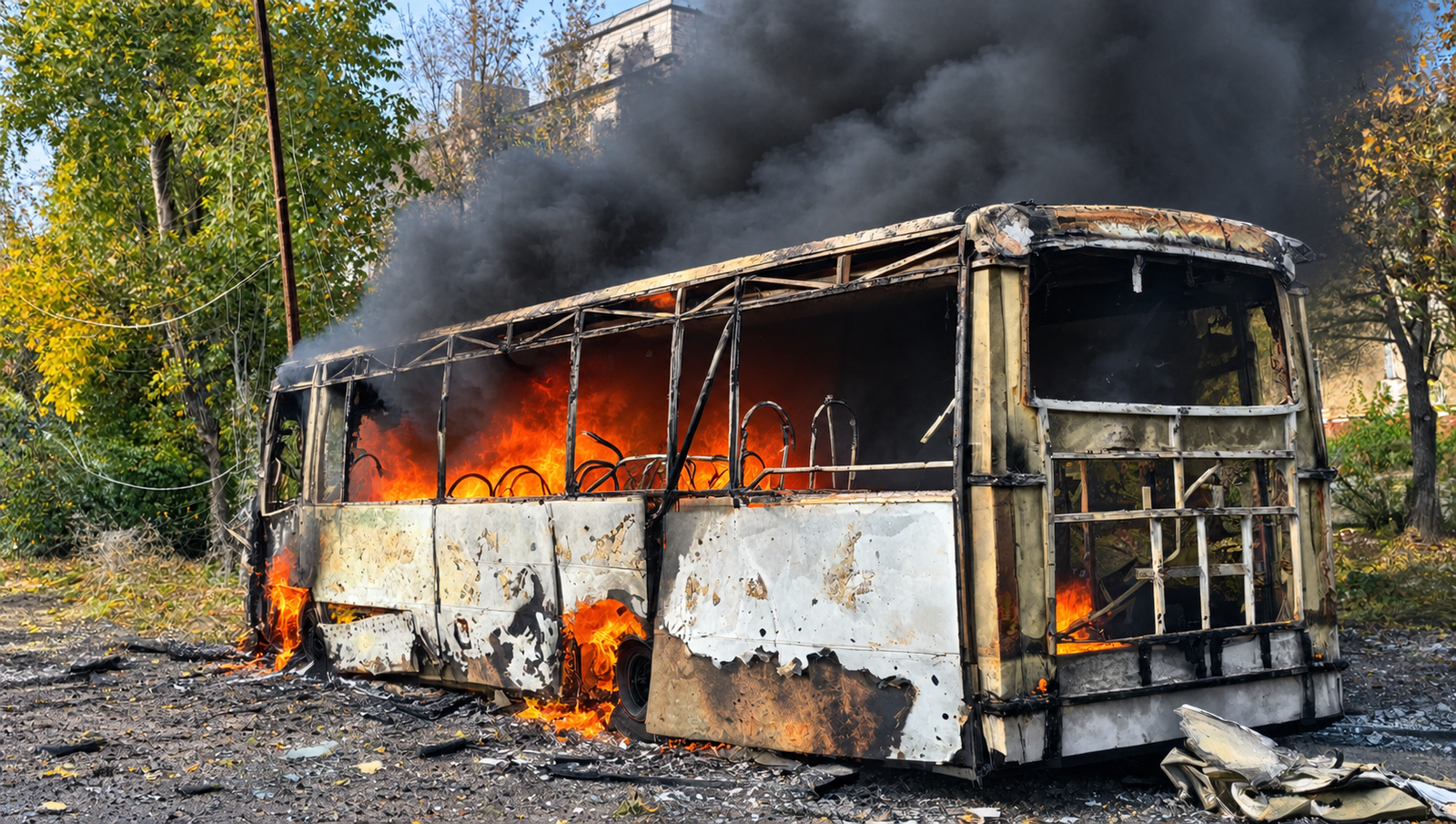
Russian strike on buses in Kramatorsk
The Russian strike on buses happened as the two vehicles were carrying passengers through the city. The initial death toll was reported at 12 before rising to 30 and later 33 as emergency workers continued operations at the scene.
Ukraine’s State Emergency Service later confirmed that 33 people had been killed and another 18 wounded. Authorities said some victims were difficult to identify because of the severity of their injuries.
Images from the scene showed a badly burned bus, debris across the road and emergency workers responding to the aftermath.
The Donetsk regional authorities accused Russian forces of deliberately targeting civilian transportation. Ukrainian officials said there was no military target at the location and described the incident as another deadly attack on civilians.
Russia has repeatedly denied deliberately targeting civilians during its war in Ukraine.
What happened in Kramatorsk?
The Russian strike on buses occurred in Kramatorsk, one of the most important Ukrainian-controlled cities in Donetsk. The city is located close to the frontline and forms part of Ukraine’s defensive belt in the eastern region.
The bomb struck a street where two passenger buses were operating. An apartment building was also damaged, according to Ukrainian authorities. Fires broke out after the explosion, requiring emergency crews to respond while security threats remained in the area.
The attack forced authorities to suspend public transportation in Kramatorsk and neighbouring Sloviansk. Officials said the worsening security situation made normal bus operations unsafe.
The suspension is expected to affect thousands of civilians who depend on public transportation for work, medical appointments and other essential travel.
Death toll rises after Russian attack
The death toll from the Russian strike on buses changed several times as rescue and identification efforts continued.
Initial reports said 12 people had been killed and more than a dozen injured. The number of fatalities later increased to 30 before Ukraine’s State Emergency Service reported that 33 people had died and 18 had been wounded.
Three additional people were also reported killed in shelling in Bilenke, part of the wider Kramatorsk community, according to Ukraine’s emergency service.
The changing figures reflect the difficulty of emergency operations in a frontline area where further attacks can put rescuers at risk.
Ukrainian police said officers documenting the attack faced additional drone threats while helping victims at the scene.
Russian attacks on Ukraine intensify
The Russian strike on buses came amid a wider increase in deadly Russian attacks across Ukraine.
A day earlier, a Russian missile strike on the northern Ukrainian city of Pryluky killed at least 22 people, including five children, according to Ukrainian officials. The attacks have also caused extensive damage to energy infrastructure and contributed to worsening power outages in Kyiv and other areas.
The latest escalation has raised concerns about Ukraine’s ability to protect civilians and critical infrastructure as winter approaches.
Russian forces have increasingly relied on drones, missiles and guided bombs to strike Ukrainian cities and infrastructure. Kramatorsk and other cities in the Donetsk region remain particularly vulnerable because of their proximity to the frontline.
Zelensky calls for stronger air defence
Ukrainian President Volodymyr Zelensky condemned the Russian strike on buses and called for stronger international support for Ukraine’s air-defence capabilities.
Zelensky has repeatedly urged Ukraine’s allies to provide additional defensive systems capable of intercepting Russian missiles, drones and other aerial weapons.
Following the latest attack, Ukrainian officials again stressed the need for international partners to increase military and defensive assistance.
The attack is also likely to increase diplomatic pressure on Russia as Kyiv continues to seek greater international action over attacks against civilians.
Why Kramatorsk matters
Kramatorsk is strategically important because it is one of the largest Ukrainian-controlled cities in the Donetsk region.
The city serves as a major transportation and logistical centre and is part of Ukraine’s defensive network in the eastern Donbas area. Russia has sought to capture more territory in Donetsk, making Kramatorsk a continuing target.
For civilians who remain in the city, however, public transportation is a basic necessity rather than a military asset.
The Russian strike on buses demonstrates the risks faced by people simply travelling through the city. The attack has prompted authorities to reassess public transportation operations while security conditions remain unstable.
What happens after the bus attack?
Ukrainian authorities are continuing to identify those killed, treat the wounded and document the damage caused by the Russian strike on buses.
Public transportation in Kramatorsk and Sloviansk has been suspended as officials assess the security situation. Further restrictions could remain in place if Russian attacks continue.
The latest attack also adds to mounting civilian casualties across Ukraine and comes at a time when Russian aerial attacks are increasing in several parts of the country.
For Ukraine, the immediate priority is protecting civilians and strengthening air defences. For residents of Kramatorsk, the deadly Russian strike on buses is another reminder of the continuing danger of living in a city close to the frontline.
As rescue and identification efforts continue, the attack is expected to fuel further calls from Kyiv for stronger international support and greater pressure on Moscow.







Leave a Comment